

Football’s global governing body shapes the sport at every level — from grassroots development programs in emerging nations to the most watched sporting event on the planet. Understanding what FIFA is, how it operates, and what its major competitions mean gives any football fan a clearer picture of the game they follow. Whether you are new to football or simply filling in the gaps, this guide covers the essentials. Fans in Bangladesh looking to follow FIFA competitions with added excitement can do so through DBBet BD, which covers international football across all major tournaments.
What Is FIFA: The Organization Behind Global Football
What is FIFA in practical terms — it is the international governing body responsible for organizing and regulating association football worldwide. Founded in 1904, FIFA oversees the rules of the game in cooperation with IFAB, manages relationships with 211 member associations, and distributes development funding to football federations across every continent. No other sports organization governs quite as many nations — FIFA has more member states than the United Nations. Its headquarters sit in Zurich, Switzerland, and its decisions affect everything from transfer regulations and player eligibility to how referees are trained and how stadiums must be certified for international competition.
What Does FIFA Stand For: The Name and Its Origins
What does FIFA stand for — the acronym comes from the organization’s French name: Fédération Internationale de Football Association. French was chosen as the founding language because the sport’s early international governance was led largely by European nations for whom French served as a common diplomatic language. The name has remained unchanged since 1904 despite English becoming the dominant language of global football communication. FIFA is always written in its abbreviated form across all official communications regardless of language, making it one of the most recognized acronyms in international sport. The organization’s motto — For the Game. For the World — reflects its stated commitment to football as a universal social force.
FIFA’s Founding History and Early Development
FIFA was established on May 21, 1904, in Paris, with seven founding member associations: France, Belgium, Denmark, the Netherlands, Spain, Sweden, and Switzerland. England, despite having invented the modern game, initially declined to join before eventually affiliating in 1906. The early decades were turbulent — two World Wars interrupted international football entirely, and disputes over amateurism versus professionalism caused persistent friction between European federations. FIFA’s membership expanded dramatically through decolonization in the 1950s and 1960s as newly independent African and Asian nations joined, fundamentally changing the organization’s political balance. Today it operates through six continental confederations covering every active football-playing nation on earth.
The FIFA World Cup: The Biggest Show in Sport
The FIFA World Cup is held every four years and remains the single most watched sporting event in human history. The 2022 edition in Qatar drew a cumulative global audience estimated at five billion across the tournament, with the final between Argentina and France attracting around 1.5 billion viewers simultaneously. Thirty-two nations compete across a month-long tournament of group stages, knockout rounds, and a final that effectively stops the world. From 2026, the tournament expands to 48 teams across three host nations — the United States, Canada, and Mexico — making it the largest World Cup ever staged. For most players, reaching the World Cup represents the pinnacle of a professional career regardless of club achievements.
How World Cup Qualification Works
Reaching the World Cup requires navigating a qualifying campaign that begins almost immediately after the previous tournament ends. Each continental confederation receives an allocation of spots based on FIFA’s assessment of regional football strength. UEFA — Europe’s confederation — receives the largest allocation, currently thirteen guaranteed spots. AFC, covering Asia, receives between four and five. CONMEBOL, South America’s confederation, sends four to five of its ten members. CAF represents Africa with nine spots from 2026. Smaller confederations compete for the remaining places through intercontinental playoff rounds. The qualifying process itself generates some of football’s most intense matches — nations with passionate supporter bases but limited squads producing extraordinary atmospheres in pursuit of a single tournament berth.
What Is the FIFA Club World Cup
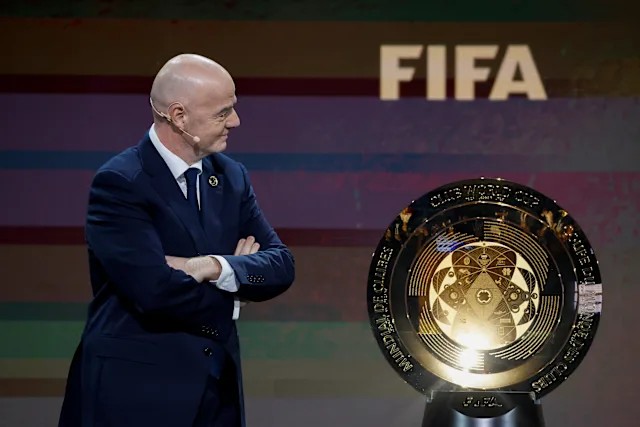
The FIFA Club World Cup is a separate competition that brings together the champion clubs from each of FIFA’s six continental confederations to compete for the title of world’s best club side. Historically run as a compact seven-team tournament, the competition has been dominated by European clubs — Real Madrid hold the record for most titles. FIFA has significantly restructured the competition from 2025, expanding it to 32 clubs competing across a full group-stage and knockout format similar to the World Cup itself. The expanded version will be hosted in the United States and features clubs from every confederation, giving South American, African, and Asian champions meaningful game time against European elite opposition for the first time at scale.
FIFA’s Governance Challenges and Reform Efforts
FIFA’s history is not without serious controversy. The organization faced its most significant crisis in 2015 when American and Swiss authorities indicted dozens of football officials on corruption charges related to bribery, money laundering, and fraud connected to broadcasting and marketing contracts. Several senior FIFA executives were arrested, and long-serving president Sepp Blatter resigned amid the fallout. Gianni Infantino was elected president in 2016 on a reform platform and has since pushed through financial transparency measures and expanded development funding distribution. Critics argue the reforms have not gone far enough, and questions about governance quality persist. The 2022 World Cup in Qatar renewed intense scrutiny over the bidding process and treatment of migrant workers during stadium construction.
FIFA’s Development Programs and Global Football Growth
Beyond competitions, FIFA operates substantial development programs that distribute funding to member associations for infrastructure, coaching education, and grassroots participation. The FIFA Forward program allocates base funding to every member association annually, with additional grants available for specific projects. For smaller football nations including Bangladesh, this funding represents a meaningful contribution to facility upgrades and coach licensing that domestic revenue alone could not support. FIFA also runs global initiatives targeting women’s football growth, referee development, and social programs that use football as a vehicle for education and community development. The organization’s stated ambition is that every child on the planet should have access to organized football regardless of economic circumstance.
Why FIFA Matters Beyond the Tournament Calendar
FIFA’s influence extends well beyond organizing competitions. Its regulations govern how players transfer between clubs across international borders, setting rules that every professional league must follow. Its calendar determines when international breaks occur, creating an annual rhythm that club managers often resent but cannot override. Its ranking system determines World Cup seedings and playoff structures. Its rule-making partnership with IFAB shapes every aspect of how the game is played — from VAR implementation to handball interpretation. Love or criticize the organization, football without a central governing body would fragment into incompatible regional systems within a generation. FIFA’s existence, whatever its flaws, is what makes global football coherent.
