

Facial aging is a complex, multi-layered anatomical process that involves significant structural changes beneath the skin rather than superficial skin laxity alone. Over time, gravity, progressive loss of facial volume, and the gradual weakening of supporting connective tissue lead to sagging in the midface, pronounced nasolabial folds, jowling along the jawline, and loose skin throughout the neck. While non-surgical aesthetic treatments such as dermal fillers, neurotoxins, and energy-based skin tightening devices offer temporary refreshment for early signs of aging, surgical facial rejuvenation remains the definitive gold standard for achieving significant, long-lasting structural restoration.
For patients considering surgical intervention, understanding the evolution of surgical techniques is essential. Modern aesthetic facial surgery has progressed far beyond the traditional cutaneous skin-only tightening methods of previous decades, which often produced a tight, pulled, or unnatural appearance. Today, comprehensive facial restoration focuses on repositioning deeper muscular and structural layers to create balanced, authentic, and enduring rejuvenation. Among the leading modern techniques, the SMAS (Superficial Musculoaponeurotic System) facelift and the deep-plane facelift represent two of the most sophisticated methodologies available in aesthetic surgery.
Understanding the SMAS Layer in Facial Aging
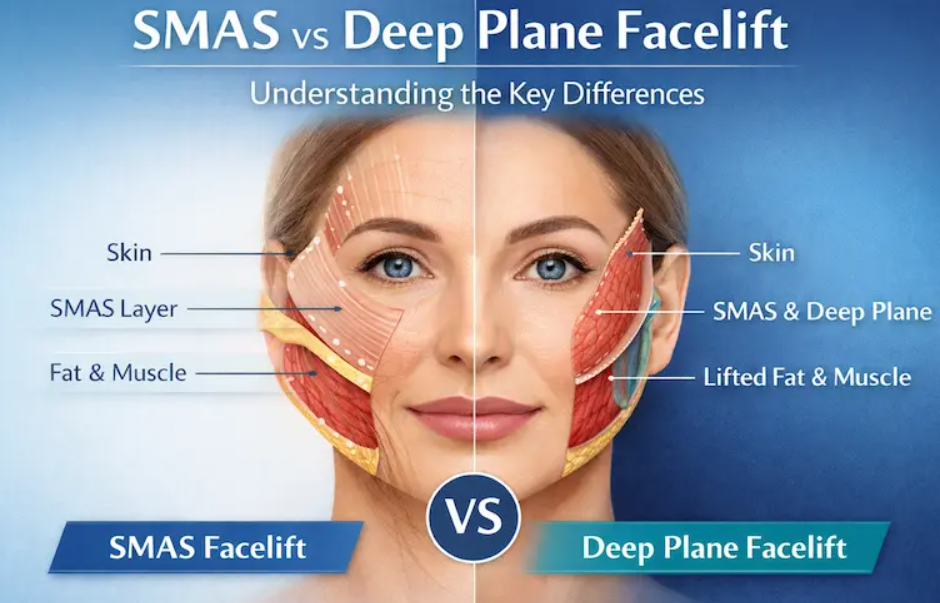
The Superficial Musculoaponeurotic System, commonly referred to as the SMAS, is a continuous fibrous network of muscle and collagen that envelops the deeper structures of the face and neck. As individuals age, this critical supportive layer descends, causing the overlying fat compartments and skin to shift downward. Addressing the SMAS layer during surgery ensures that tensile forces are placed entirely on the deeper structural tissue rather than pulling the fragile surface skin.
In a standard SMAS facelift, the surgeon elevates and tightens this underlying foundation through plication (folding and stitching) or imbrication (trimming and securing). This technique elevates the lower cheeks, redefines the jawline contour, and smooths the upper neck. Because the tension is securely anchored to robust muscular tissue, incisions heal cleanly with minimal tension, resulting in discreet scars and natural facial harmony.
The Evolution of the Deep-Plane Facelift
The deep-plane facelift is an advanced surgical technique that goes beneath the SMAS layer to release specific facial retaining ligaments that tether the deep tissue to the facial skeleton. By freeing these retaining ligaments, the surgeon can reposition the descended malar fat pads in the midface, smooth prominent nasolabial folds, and elevate the lower face as an integrated anatomical unit without tension.
Because the deep-plane approach mobilizes deeper tissue planes directly, it allows for vertical elevation of the midface that is difficult to achieve through superficial techniques alone. This methodology provides exceptional longevity and a refreshed, youthful contour that maintains genuine emotional expression and dynamic facial movement.
Determining the Right Surgical Technique
Neither procedure is universally superior for every patient; rather, the optimal approach depends entirely on individual facial anatomy, degree of midface descent, skin elasticity, prior aesthetic procedures, and personal aesthetic goals. A younger patient with moderate lower-face jowling may achieve spectacular results with a targeted SMAS technique, whereas an individual with significant midfacial volume loss, deep nasolabial creases, and heavy neck laxity may benefit most from a deep-plane release.
Achieving exceptional aesthetic outcomes requires partnering with a board-certified plastic surgeon who possesses extensive specialization in facial anatomy. Personalized surgical planning ensures every nuance of facial structure is addressed with artistic precision. Patients seeking comprehensive structural restoration frequently explore advanced facelift procedures at The Collins Center, where surgical precision is tailored to restore youthful facial contours while preserving natural character.
Recovery Realities and Healing Expectations
Preparing for surgical recovery is a vital component of the patient journey. Modern surgical techniques, refined anesthesia protocols, and meticulous tissue handling have significantly reduced post-operative discomfort and downtime. Understanding what to expect during each stage of healing helps patients approach their transformation with confidence.
During the first forty-eight to seventy-two hours, mild swelling, bruising, and a sensation of tightness around the jawline and neck are normal. Patients are advised to keep their head elevated and rest quietly at home. Most surgical drains, if utilized, and initial protective dressings are gently removed within the first two to three days.
By the end of the second week, the vast majority of visible bruising and acute swelling has dissipated. Many patients feel comfortable returning to professional work and social activities around ten to fourteen days post-surgery. Light cardiovascular exercise can generally resume at three to four weeks, while strenuous athletic activities are re-introduced around six weeks. While initial improvements are evident quickly, final structural refinements continue to settle beautifully over six to twelve months, revealing refreshed and natural contours that endure for years.
