

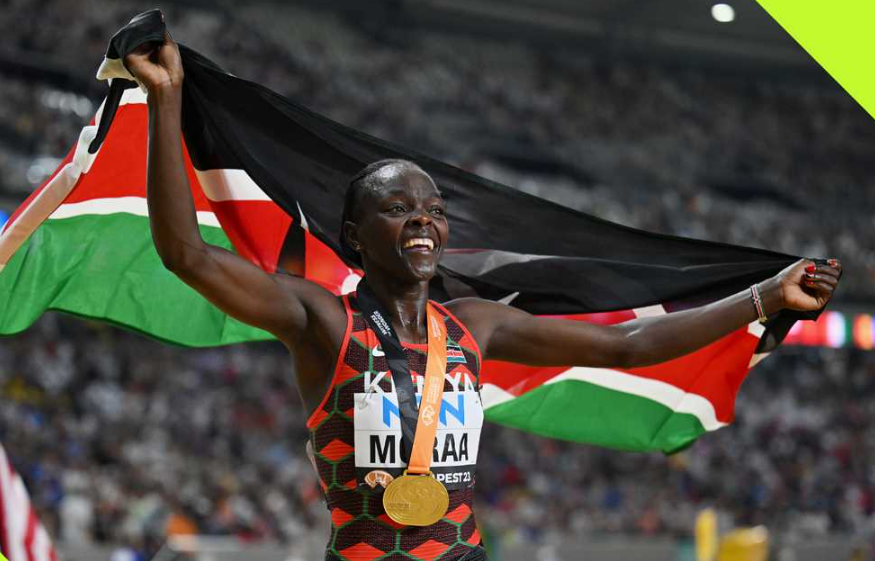
Some nations produce athletes. Kenya produces phenomena. The consistency with which a country of fewer than sixty million people has generated world record holders, Olympic champions, and the sport’s defining personalities across multiple generations of distance running is not merely impressive — it is statistically improbable in ways that demand explanation beyond simple talent attribution. Understanding why kenya sport commands the respect it does globally requires looking into the geographic, cultural, economic, and philosophical conditions that have made this small East African nation one of the most remarkable athletic production environments in human history. Fans following Kenyan athletics and international sport across disciplines can find dedicated coverage at https://dbbet-kenya.com/.
Kenya Sport: The Foundation of Global Respect
Kenya sport earned its international reputation through distance running dominance so sustained and so comprehensive that it has genuinely altered the sport’s understanding of what human endurance is capable of producing. From Kipchoge Keino’s altitude-assisted Mexico City Olympic triumph in 1968 — which introduced the world to Kenyan running in its most dramatic possible form — through the generations of marathon champions, world cross-country winners, and Olympic gold medalists who followed, Kenya has maintained a competitive presence in distance running that no other nation approaches across the full span of the modern athletics era. The specific combination of altitude training environment, cultural motivation, and the economic transformation that athletic success provides has created conditions where running excellence compounds across generations — each cohort of champions inspiring the next through the visible evidence of what disciplined running can deliver.
What Makes a Great Champion: The Kenyan Model
Great champion status in Kenyan athletics reflects qualities that the country’s running culture has historically developed more systematically than anywhere else on the planet. The physiological foundation — altitude-adapted cardiovascular systems, biomechanically efficient running styles developed through years of high-volume movement before formal training begins, and the specific musculature that East African running genetics and training traditions produce — provides the physical base. The psychological framework built within Kenyan athletic culture — the specific understanding that suffering in training is not merely tolerable but essential, that patience across years of development precedes competitive excellence, and that the collective training environment creates accountability that individual motivation cannot sustain alone — produces the mental qualities that championship performance demands. The economic reality — that athletic success transforms family circumstances in ways that other career pathways in the Kenyan context cannot replicate — provides the motivational intensity that Western running cultures, where athletic failure carries limited economic consequence, structurally cannot match.
Kipchoge Keino: The Original Champion
The story of Kenya’s rise to global athletic prominence begins with Kipchoge Keino — the police officer from the Rift Valley whose Mexico City Olympic performances in 1968 delivered Kenya’s first major global athletics recognition. Keino’s gold medal in the 1500 meters — run at altitude that adversely affected many of his competitors but reflected the conditions Kenyan athletes had trained in throughout their lives — was followed by a silver in the 5000 meters that confirmed his performance was excellence rather than circumstance. The 1972 Munich Olympics added a steeplechase gold that demonstrated his versatility extended beyond the pure speed events that his 1500 meters success had established. Beyond the medals, Keino’s later work — establishing the Lornah Kiplagat Foundation that supported orphaned children through sport — reflected a model of champion sport service that Kenya’s greatest athletes have historically maintained alongside their competitive excellence, understanding their public platform as carrying responsibility beyond personal achievement.
Sport Legends: The Generations That Followed
Sport legends from Kenya’s running tradition span generations whose individual stories collectively build the case for structural rather than coincidental excellence. Henry Rono’s 1978 world record spree — setting world records in the 3000 meters, steeplechase, 5000 meters, and 10,000 meters within a single year in a display of distance running breadth that the sport had not previously witnessed — demonstrated that Kenyan running quality extended beyond a single event or a single exceptional individual. Paul Tergat’s marathon world record and his iconic duels with Haile Gebreselassie established the cross-continental rivalry between Kenya and Ethiopia that has defined distance running for decades. Catherine Ndereba’s four Boston Marathon victories and world record demonstrated that women’s Kenyan running carried equal quality to the men’s tradition. David Rudisha’s world record 800 meters performances — combining the middle distance speed of a track specialist with the specific tactical intelligence that Olympic finals demand — showed that Kenyan athletic excellence was not confined to the longer events where altitude adaptation provides its most direct competitive advantage.
The Rift Valley: Geography as Destiny
No understanding of Kenya’s athletic production is complete without serious engagement with the Rift Valley’s specific geographic contribution. The region’s elevation — training at between 2,000 and 2,400 meters above sea level across virtually all of Kenya’s distance running heartland — produces physiological adaptations whose competitive advantage is measurable across every performance metric that endurance athletics tracks. Red blood cell concentration, VO2 maximum values, and the specific cardiovascular architecture that altitude living develops over years rather than altitude camp weeks collectively create athletes who arrive at sea-level competition with oxygen processing capabilities that their competitors are attempting to replicate through altitude training camps rather than naturally possessing. The Rift Valley’s specific combination of altitude, relatively flat terrain ideal for high-volume running, and the community infrastructure that makes serious training part of daily life rather than a dedicated departure from it creates conditions that training science can analyze but that geography alone provides only in a small number of locations globally.
Women’s Running: Kenya’s Expanding Athletic Legacy
Kenya’s women’s distance running tradition has developed alongside the men’s program but received less institutional support and international recognition across the early decades of the country’s athletic dominance — a pattern that reflects both global sport’s historical undervaluation of women’s athletics and the specific cultural contexts within which Kenyan women navigated the combination of athletic ambition and social expectation. The transformation of women’s Kenyan running into a globally dominant force — with world records, Olympic medals, and marathon major victories accumulating at rates that match the men’s program — reflects both the natural talent the environment produces regardless of gender and the progressive improvement in pathways that allow women to develop that talent into competitive excellence. Tegla Loroupe’s pioneering world record marathon performances, Vivian Cheruiyot’s track dominance, and the generation of women marathon runners now competing at the front of major race fields collectively demonstrate that Kenya’s athletic production is genuinely gender-inclusive at its highest competitive expression.
The Training Camps: Inside Kenya’s Athletic Ecosystem
The training infrastructure that supports Kenya’s athletic dominance operates through a network of camps and training groups concentrated primarily in the Rift Valley towns of Iten, Kaptagat, Eldoret, and their surrounding areas. Iten — known within global athletics as the Home of Champions — has developed a specific international reputation that attracts runners from across the world who come to train in the environment that produces Kenya’s champions rather than attempting to replicate its conditions elsewhere. The camps’ operational philosophy — communal training in groups whose pace and competitive standards are set by the fastest runners present, combined with the social accountability that group living creates — produces training environments whose combined effect on individual development exceeds what isolated preparation can deliver regardless of the technical sophistication of the training program applied. International runners who have trained in Iten describe the experience as transformative not primarily because of specific workouts but because of the cultural immersion in an environment where running excellence is the community’s primary shared value.
Kenya’s Expanding Sports Footprint Beyond Running
Kenya’s global sporting recognition rests overwhelmingly on distance running but the country’s athletic ambitions are progressively expanding into disciplines where its competitive presence is less established but growing. Rugby sevens — Kenya’s Shujaa team competing on the World Rugby Sevens Series circuit — has established Kenya as one of the sport’s most exciting competitors, producing players whose athletic profiles suit the format’s demands and generating fan culture around the national team that extends the country’s sporting identity into a genuinely new discipline. Football’s Harambee Stars are developing through improved infrastructure and organizational investment. Basketball’s growing youth participation reflects urban sport culture’s evolution in Nairobi and other major cities. The development of Kenyan sport beyond the track reflects a national sporting ambition that the infrastructure investments — stadiums, training facilities, coaching education — are progressively enabling rather than the distance running ecosystem that geography and culture provided without deliberate institutional design.
What Kenya’s Champion Culture Teaches Global Sport
The lessons that Kenya’s athletic production offers global sport extend beyond the specific physiological and environmental factors that distance running science has documented into broader principles about how champion cultures are created and sustained. The specific combination of collective training environments, economic motivation, cultural identity investment in athletic success, and the compounding inspiration effect of each generation’s champions on the next creates conditions that individual talent programs operating in isolation cannot replicate. Sport development systems that attempt to extract only the physiological lessons — replicating altitude training without the cultural infrastructure that surrounds it in Kenya — consistently produce limited results that suggest the environmental factors are necessary but not sufficient conditions for the sustained excellence that Kenya demonstrates. The fuller lesson — that champion sport cultures require the integration of physical environment, economic motivation, community identity, and institutional support across generations rather than any single element in isolation — is the one that global sport’s most ambitious development programs are progressively learning from Kenya’s example.
