

There is no sporting institution quite like the All Blacks. A national rugby team from a country of five million people that has maintained a winning percentage against all opponents across over a century of international competition that no other team in any sport comes close to matching. The black jersey, the haka, the expectation of excellence that New Zealand rugby carries as a cultural inheritance rather than an organizational aspiration — these elements combine to create something that transcends sport and becomes a statement about national identity. Fans following international rugby and major sporting events can find dedicated markets and coverage at Dbbet.
All Blacks Rugby: The Foundation of a Legacy
All Blacks rugby begins with a statistic that frames everything else — a win rate against all international opponents that has consistently exceeded eighty percent across the team’s entire history. No professional sports team across any discipline in any country maintains comparable sustained dominance over such an extended period against genuinely competitive opposition. Understanding how a small island nation achieves this requires looking beyond individual talent — though New Zealand produces elite rugby players at a per-capita rate that defies straightforward explanation — into the cultural infrastructure that treats rugby as a national project rather than merely a sport. From school level through club rugby to the Super Rugby provincial competition and ultimately the All Blacks, New Zealand’s rugby development pathway is the most coherent talent production system in the sport’s history.
The Haka: Sport’s Most Powerful Pre-Match Ritual
No pre-match ritual in global sport carries the weight, history, and genuine cultural significance of the All Blacks’ haka. The Ka Mate — performed since the early twentieth century — and the Kapa O Pango — introduced in 2005 as a haka specifically composed for the All Blacks — are not theatrical additions designed to intimidate opponents, though intimidation is frequently their effect. They are expressions of Māori cultural identity that New Zealand rugby has incorporated as a statement of what the country represents — the partnership between Māori and non-Māori New Zealand that the All Blacks embody on the international stage. Opponents’ responses to the haka have themselves become part of rugby’s cultural conversation — the Springboks linking arms, the Irish advancing toward the performing players — each choice communicating something about competitive psychology and cultural respect simultaneously.
The Rugby World Cup Record: Glory and Heartbreak
The All Blacks have won the Rugby World Cup three times — 1987, 2011, and 2015 — a record that simultaneously confirms their status as the sport’s greatest team and invites scrutiny about why a team of their consistent quality has not won more frequently across a tournament held every four years since 1987. The period between 1987 and 2011 — a twenty-four year gap between World Cup titles — became New Zealand’s national sporting wound, producing analyses, recriminations, and genuine cultural distress that the 2011 home victory finally resolved. The back-to-back wins in 2011 and 2015 restored the expected order. Subsequent World Cup campaigns have produced semifinals and finals appearances that confirm the All Blacks’ perpetual contention without delivering additional titles — each near-miss adding to the evidence that the tournament format’s compressed knockout structure creates variance that even the world’s best team cannot fully control.
Iconic Players Who Defined the All Blacks
The All Blacks’ history contains players whose names have become synonymous with rugby excellence globally — figures whose performances redefined what the game’s positions could achieve and whose influence extended into how the sport is played at every level. Colin Meads — whose physical presence and competitive ferocity made him the archetypal All Black of the amateur era — set a standard for what the black jersey demanded. Jonah Lomu’s arrival in the 1995 World Cup was the sport’s equivalent of witnessing a new physical category — a player whose combination of size, speed, and power had no precedent in rugby history and whose performances against England in the semifinals remain the most viscerally dominant individual display in World Cup history. Richie McCaw’s two World Cup victories as captain — combined with a career winning percentage and breakdown expertise that made him the sport’s most decorated player — established the benchmark for All Blacks leadership.
Dan Carter: The Greatest Fly-Half in History
Dan Carter’s claim to the greatest rugby player of his generation — and by most assessments the greatest fly-half the sport has produced — rests on a combination of qualities that rarely coexist in a single player. His goal-kicking accuracy provided the All Blacks with points-scoring reliability that opposing teams could not match through tactical discipline alone. His running game — the ability to breach defensive lines through footwork and timing rather than raw pace — created attacking opportunities from positions that less gifted players would manage conservatively. His distribution — the precision and variety of passing that unlocked his outside backs in space — reflected a rugby intelligence that coaches spend careers trying to develop in players who ultimately cannot replicate it. Carter’s 2015 World Cup final performance, after a career interrupted by injuries at previous tournaments, delivered the culmination that his talent always deserved.
The Springboks Rivalry: Rugby’s Greatest Contest
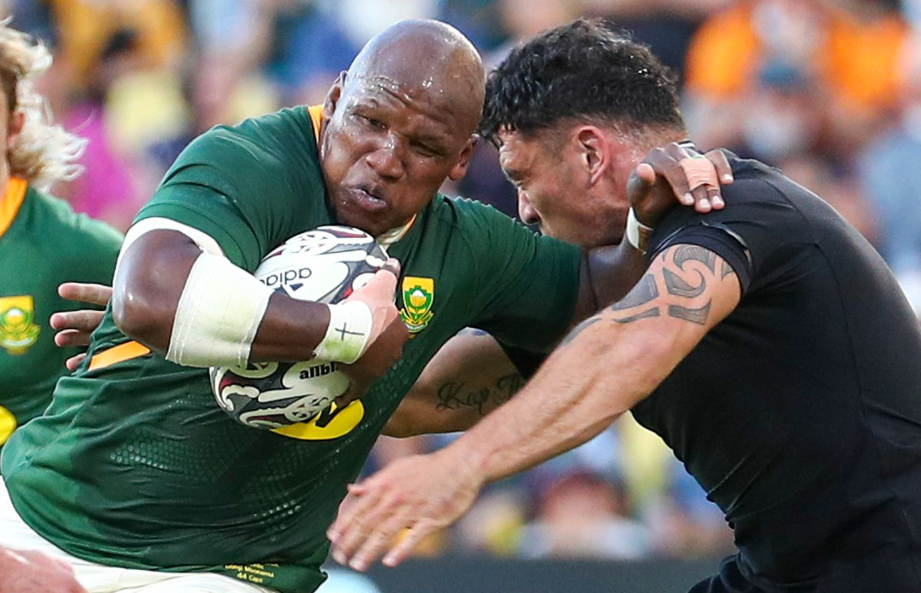
The All Blacks versus South Africa — the Springboks — is rugby’s most historically significant bilateral rivalry and one of team sport’s most compelling ongoing competitions. The two nations have competed since 1921, and the matches between them have carried weight that extends beyond rugby — the apartheid era’s complications, the 1981 Springbok tour of New Zealand that divided the country politically, and the post-apartheid reconciliation symbolism of the 1995 World Cup final have given the rivalry dimensions that pure sporting competition rarely develops. On the pitch, the contests are defined by physical intensity, strategic sophistication, and the specific pressure of two teams that know each other’s systems, personnel, and competitive tendencies with the intimacy that decades of preparation against the same opponent produces. South Africa’s consecutive World Cup victories in 2019 and 2023 have temporarily shifted the balance — the All Blacks’ response to Springbok dominance is the sport’s most watched developmental narrative.
Super Rugby and the Provincial System
New Zealand’s domestic rugby structure — the provincial competition feeding into Super Rugby franchises — is the development engine that continuously replenishes the All Blacks with competition-ready talent. The Blues, Chiefs, Hurricanes, Crusaders, and Highlanders compete in Super Rugby Pacific against Australian and Pacific Island franchises in a competition whose standard develops players more comprehensively than provincial rugby alone could achieve. The Crusaders’ sustained Super Rugby dominance — multiple consecutive championships across the past decade — reflects the Christchurch-based franchise’s coaching and development culture that has produced a disproportionate share of All Blacks talent. The provincial competition beneath Super Rugby ensures that talent identification reaches across New Zealand’s geographic breadth rather than concentrating development in Auckland and Wellington where population density would otherwise skew the pathway.
The All Blacks’ Coaching Philosophy
The coaching philosophy that has sustained All Blacks excellence across different generations of players and multiple head coaches reflects a consistent set of principles about how rugby should be played and how elite performers should be developed. The commitment to playing rugby at pace — maintaining ball-in-play time that physically and tactically challenges opponents who cannot sustain the same tempo — has been a stylistic constant that different coaching regimes have expressed through different specific systems. Player leadership within the team structure — senior players holding genuine responsibility for team culture and on-field decision-making rather than simply executing coaching instructions — creates the distributed ownership of performance standards that sustains competitive culture when individual coaches inevitably move on. The All Blacks’ coaching continuity challenge is preserving these cultural elements through transitions between coaches whose individual methods differ while the underlying philosophy remains consistent.
What the All Blacks Mean to New Zealand
The All Blacks occupy a position in New Zealand’s national identity that has no direct equivalent in any other country’s relationship with a sports team. Results affect national mood in ways that governments acknowledge and media reflects — an All Blacks loss generates genuine collective emotional experience that transcends sport fandom into something approaching communal grief among a population whose investment in the team is not merely recreational. The team’s embodiment of New Zealand’s bicultural identity — the integration of Māori cultural expression into a national team that represents all New Zealanders — makes it a more complex national symbol than purely sporting achievement would warrant. Understanding the All Blacks requires understanding that for New Zealand, rugby is not what a country does for entertainment but a significant part of how it understands itself — and the black jersey’s weight reflects the full complexity of that relationship rather than simply the competitive record it represents.
