

Martial arts carry philosophical weight that most competitive sports never develop. They are simultaneously combat systems, cultural traditions, physical disciplines, and paths of personal development that practitioners follow across entire lifetimes. Karate sits at the center of this world — a Japanese martial art with deep historical roots, global competitive infrastructure, and a debate about its relationship to Chinese kung fu that reveals as much about cultural identity as it does about technique. Fans following martial arts competition across combat sports can find dedicated markets at db bet.
What Is Karate and Where Did It Come From
Karate is a striking martial art that originated in the Ryukyu Kingdom — present-day Okinawa — before being systematized and introduced to mainland Japan in the early twentieth century. Its development drew heavily on indigenous Okinawan fighting traditions alongside Chinese martial arts influences brought through trade and cultural exchange between the islands and the Chinese mainland. Gichin Funakoshi, widely regarded as the father of modern karate, introduced the art to Tokyo in 1922 and spent decades formalizing its practice and philosophy. The name itself translates as empty hand — reflecting a system built entirely around the practitioner’s body as a weapon rather than external tools. From those Okinawan origins, karate has grown into one of the world’s most practiced martial arts with tens of millions of active practitioners globally.
Japanese Martial Arts: Karate’s Place in a Rich Tradition
Japanese martial arts form one of the most comprehensive combat systems collections any culture has produced. Judo, kendo, aikido, jujutsu, ninjutsu, and sumo all carry distinct histories, philosophies, and technical vocabularies that reflect different aspects of Japanese warrior culture. Karate occupies a particular position within this tradition — it is among the most globally widespread, having exported itself through military presence, cultural exchange, and competitive sport infrastructure in ways that more traditional forms have not achieved. The Budo framework governing Japanese martial arts emphasizes character development alongside technical mastery, which gives karate and its counterparts a philosophical dimension that pure sport fighting systems typically lack. Understanding karate means understanding it as one expression within a broader cultural conversation about discipline, respect, and self-cultivation.
Shotokan Karate: The World’s Most Practiced Style
Shotokan karate is the style Funakoshi developed and the most widely practiced karate system globally. Named after Funakoshi’s pen name Shoto, the style is characterized by deep stances, powerful linear techniques, and a kata catalog that encodes the system’s technical knowledge in choreographed sequences practiced by millions of students worldwide. Shotokan emphasizes strong basics — kihon — as the foundation upon which all advanced technique is built. Its structured curriculum, with clearly defined progression from beginner to master level, made it ideally suited to large-scale institutional teaching through university clubs, community dojos, and national federation structures. The Japan Karate Association, the primary Shotokan governing body, spread the style internationally through instructor exchange programs that planted Shotokan schools across every continent during the mid-twentieth century.
Karate Belt Order: The Progression System Explained
The karate belt order provides the visible progression framework that structures a practitioner’s development journey. Beginning students start at white belt — symbolizing emptiness and readiness to receive knowledge. Progression through colored belts varies by style and organization but typically moves through yellow, orange, green, blue, and brown before reaching the black belt grades. Each grade requires demonstrated competency in kata, kumite, and kihon assessed through formal examination. Black belt itself is not an endpoint but a beginning — the first dan representing the point where a practitioner has genuinely learned the basics and can begin deeper study. Many styles recognize up to ten dan grades, with the highest levels awarded for lifetime contribution to the art rather than technical superiority alone. The belt system provides tangible milestones that sustain motivation across the years serious practice requires.
Kung Fu vs Karate: Understanding the Core Debate
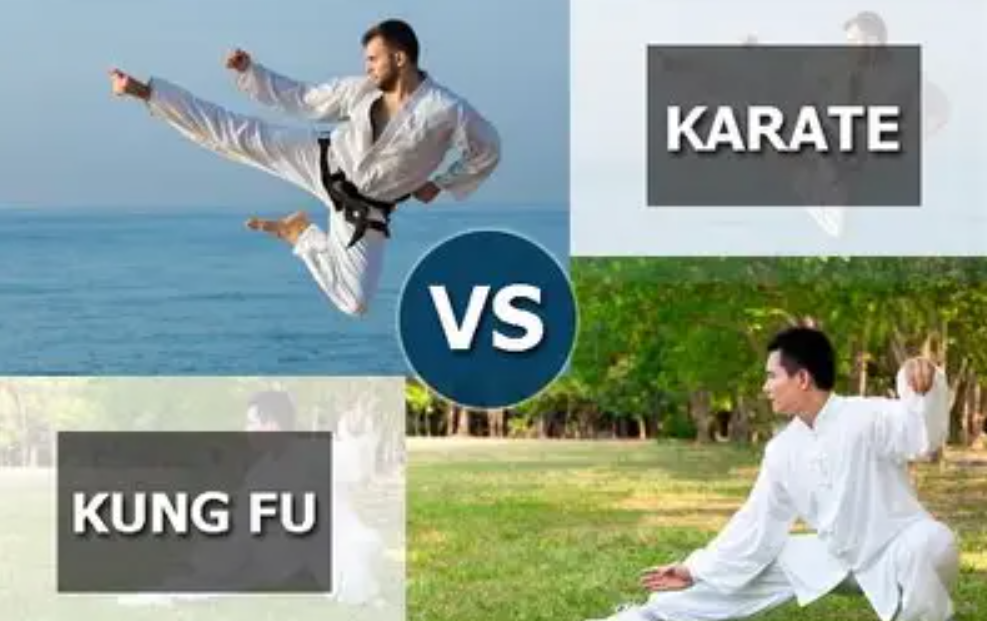
The kung fu vs karate comparison generates strong opinions because it touches questions of cultural identity, technical effectiveness, and historical influence that martial artists care about deeply. Kung fu — the collective term for Chinese martial arts — predates karate historically and demonstrably influenced Okinawan fighting systems through centuries of contact. Technically, kung fu systems tend toward circular movement, softer deflection principles, and a broader diversity of animal-inspired styles. Karate emphasizes linear power generation, direct attack and defense, and a more formalized kata structure. Neither system is categorically superior — both have produced effective fighters and both contain deep technical knowledge. The debate persists partly because martial arts identity is culturally loaded, and practitioners naturally invest in the superiority of their own tradition.
Olympic Karate and the Competitive Dimension
Karate’s inclusion in the Tokyo 2020 Olympic Games represented a landmark moment for a martial art that had sought Olympic recognition for decades. The competition format featured both kata — judged performance of forms — and kumite — point-based sparring — giving the Games a window into karate’s dual nature as both performance art and combat sport. The result was mixed in terms of legacy: the IOC did not include karate in the Paris 2024 program, leaving the sport’s Olympic future uncertain. The competitive karate world continues through the World Karate Federation’s own championship structure, which runs well-organized global and continental events. The Olympic experience demonstrated karate’s broadcast potential while also exposing the stylistic divisions within the sport that complicate unified governance.
Karate’s Global Spread and Cultural Adaptation
Few martial arts have adapted to diverse cultural contexts as successfully as karate. From its Japanese origins, the art traveled to America through military personnel returning from postwar Japan, to Europe through cultural exchange programs, and across Asia through competitive networks established during the latter half of the twentieth century. Each cultural context shaped local practice in different ways — American karate developed a tournament culture that emphasized athleticism and entertainment; European karate emphasized technical precision and traditional values; Southeast Asian practice often blended karate with indigenous martial traditions. This adaptability reflects something fundamental about karate’s structure — its core principles are transferable across cultural contexts without losing their essential integrity, which is precisely why the art has sustained global growth across seven decades of international practice.
Training in Karate: What Serious Practice Actually Requires
Serious karate training demands consistency across years rather than intensity across weeks. The physical requirements — flexibility, explosive power, coordination, and cardiovascular fitness — develop gradually through daily practice that cannot be meaningfully shortcut. Kata practice requires thousands of repetitions before movement becomes genuinely automatic rather than consciously constructed. Kumite develops timing, distance management, and psychological composure under pressure that only live practice against resisting opponents provides. Most serious practitioners train five to six sessions weekly, combining solo kata work, partner drills, and controlled sparring. The mental discipline required — returning to the same basics repeatedly across years without losing focus or motivation — is itself considered part of the art’s developmental purpose, building character qualities that extend well beyond the dojo into every area of a practitioner’s life.
