

Alright, let’s cut to the chase. You’re grinding through levels, and now you’re wondering if dropping a bet on Parimatch from India is going to get you banned in real life. The straight-up answer is that it operates in a legal grey area.
So, what does that actually mean? It means that while Parimatch isn’t officially licensed in India, you, as a player, aren’t griefing yourself by using it. The reason is simple: the platform is based entirely outside of India, so it’s not on the local server.
Is Parimatch Legal In India? The TL;DR
You might wonder why Parimatch isn’t just nerfed like a local betting shop. It all boils down to a massive loophole in some seriously old-school laws.
India’s main piece of gambling legislation is the Public Gambling Act of 1867. Peep that date for a second. The law was written more than a century before the internet was even a thing. It was designed to shut down physical gambling dens—what it calls “common gaming houses”—on Indian soil.
Naturally, a law from 1867 has zero jurisdiction over a website whose servers are hosted in another country, like Curaçao.
This is the core reason you can access Parimatch in India. It’s an online, offshore platform, which means it neatly sidesteps those ancient, land-based regulations. Since no central law has been passed to specifically ban licensed international betting sites, they can offer their services to Indian players.
As legal experts often point out, India simply “lacks a comprehensive regulatory ecosystem” for online betting. This gap creates a space where foreign operators can serve Indian players without breaking a specific Indian law.
The Offshore Advantage
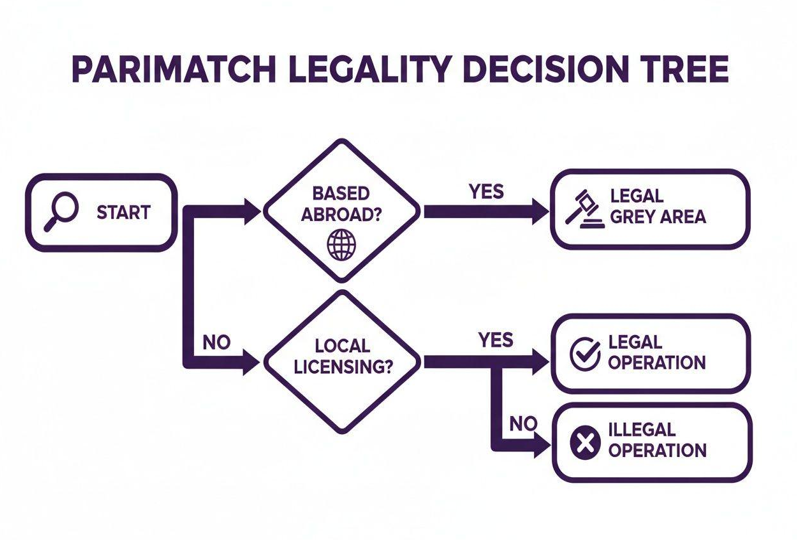
This flowchart breaks down the simple logic that puts Parimatch in this unique legal position. It’s the ultimate spawn point.
As you can see, the single most important factor is that the company is based abroad. This is what defines its “legal grey area” status in India, and it’s a critical distinction for any player to understand.
Legal Status At A Glance: Offshore Vs. Local Betting
To make this even clearer, let’s compare using an offshore site like Parimatch to a traditional, physical gambling operation in India. The difference is like comparing a 144Hz monitor to a 60Hz one.
| Legal Factor | Offshore Sites (e.g., Parimatch) | Domestic Gambling (Physical) |
| Governing Law | Not covered by the Public Gambling Act, 1867. | Directly prohibited by the Public Gambling Act, 1867. |
| Player Risk | Low. No specific central law punishes players for using them. | High. Both operating and visiting are illegal and punishable. |
| Location | Servers and operations are based outside of India. | Operations are physically located within Indian territory. |
| Regulation | Licensed by foreign authorities (e.g., Curaçao, Malta). | Unregulated and explicitly illegal in most states. |
| Overall Status | Operates in a legal grey area. | Black and white: illegal. Instant ban. |
This table highlights why the offshore model works. While local gambling is a clear “no,” the foreign-based nature of sites like Parimatch puts them in a completely different category from a legal perspective.
Why 19th-Century Laws Don’t Apply to Online Betting
Ever wonder why a dusty old law from 150 years ago keeps getting dragged into conversations about modern online betting? The Public Gambling Act of 1867 is the main culprit behind all the confusion around platforms like Parimatch. But here’s the thing: it’s completely out of its depth in the digital age. It’s like bringing a knife to a gunfight.
Trying to use this law against a website today is like trying to apply horse-and-buggy traffic rules to a Formula 1 race. It just doesn’t work. The 1867 Act was written with a very specific target in mind: physical gambling dens, what they called “common gaming houses.” The whole point was to give police the power to raid and shut down brick-and-mortar operations running on Indian soil.
Back then, no one could have even imagined a world with the internet, where a betting site could be run from servers thousands of miles away. This massive blind spot is the central loophole that offshore betting sites operate in. So, when we ask whether Parimatch is legal in India, we’re really talking about this exact gap between old laws and new tech.
The Power of Jurisdiction
So, how does this actually play out? It all boils down to a legal idea called jurisdiction. Think of it as the server region where a set of rules applies. The Public Gambling Act gives Indian authorities power, but only within India’s borders.
Parimatch isn’t headquartered in Mumbai or Delhi. Its servers and operations are based in places like Curaçao.
This offshore setup is the key. An Indian police force has zero legal authority to raid a server located in another country. The 1867 law simply can’t reach across international borders to pull the plug on a website.
This isn’t some minor technicality—it’s the very foundation that the entire offshore betting industry for Indian players is built on. The platform exists outside the physical and legal grasp of the exact laws designed to stop gambling in India.
The Digital Escape Clause
Picture it like this: when you play an online game hosted on European servers, your connection is travelling to Europe. Parimatch works in the same way. When you log in from India, you’re accessing a service that is legally hosted, operated, and regulated in another country.
This creates a peculiar situation where:
- The Operator is Safe: Parimatch, as a company, isn’t breaking Indian law because it’s not running a “gaming house” inside India.
- The Player is in a Grey Area: As a player, you aren’t the focus of the 1867 Act. That law was designed to go after the people running the gambling dens, not the individuals placing bets, especially not on foreign websites.
This fundamental mismatch between 19th-century rules and 21st-century technology is what creates the “legal grey area” we always hear about. The law is trying to patrol a physical neighbourhood while the game has moved to a global, digital city it can’t even see. While the government can and does block website domains from time to time, the core operation remains untouched by these ancient statutes.
Skill vs. Chance: The Great Indian Gaming Debate
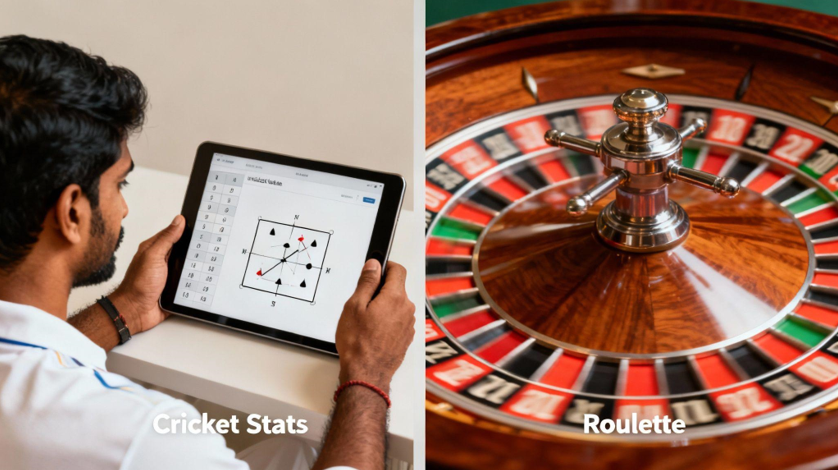
In India, the entire legal puzzle of gaming boils down to one huge question: are you using skill or just banking on RNG? This isn’t just talk; it’s the very foundation of Indian gambling law. It’s the reason some games get a thumbs-up while others get permabanned.
Think of it this way. A chess grandmaster relies on years of practice, strategic thinking, and deep knowledge to win. That’s a “game of skill.” Now, imagine someone getting a legendary drop from a loot box—that’s pure, unpredictable luck. That’s a “game of chance.”
This crucial difference is exactly why games like Rummy and Fantasy Sports have found legal ground in many parts of India. The courts have agreed that winning these games isn’t just about a lucky draw. It requires a solid grasp of strategy, player performance, and probabilities. Your success is tied directly to your expertise.
Where Does Parimatch Fit In?
So, how do the offerings on a platform like Parimatch stack up on this skill-versus-chance scale? This is where things get a bit complicated for anyone trying to figure out if Parimatch is legal in India.
Sports betting, for example, lives in a massive grey area. You could easily argue that predicting the outcome of a cricket match involves analysing player form, pitch conditions, and past performance—all clear signs of skill. But then again, an unexpected dropped catch or a sudden downpour can change everything, pushing it back towards the “chance” category in the eyes of the law. It’s all about the meta.
Casino games, on the other hand, are much more black and white.
- Roulette: This is the definition of pure RNG. The ball lands where it lands, and no amount of brainpower can change that.
- Slot Machines: Also pure chance. Everything is decided by a Random Number Generator (RNG), making it a game of luck.
- Blackjack: An interesting one. Luck is a massive factor, but skilled players who know basic strategy can definitely nudge the odds slightly in their favour, like knowing the best build for your character.
The legal logic is pretty straightforward: If skill is the main ingredient for winning, the game is generally allowed. If chance is the dominant factor, it’s considered gambling and faces heavy restrictions under most state laws.
This core debate is why the rules are so inconsistent across the country. Some states have drawn a hard line, banning all real-money online gaming to sidestep the argument entirely. This creates a patchwork of regulations where what’s perfectly fine in one state could be illegal just across the border.
If you’re curious about what’s currently trending, you can explore the most popular online casino games in India in our detailed guide, which breaks down what players are enjoying and why.
How Parimatch Operates As An Offshore Platform
So, how exactly does Parimatch manage to operate so openly in India without a local licence? The entire setup hinges on a straightforward but clever model: they are an offshore platform.
Think of it like a massive company working remotely. Parimatch isn’t physically located in India. Its headquarters, servers, and legal operations are based somewhere else—often in a jurisdiction like Curaçao that provides gaming licences. This international setup is what allows them to navigate around India’s domestic gambling laws, which, as we’ve covered, are mostly designed to shut down physical gambling houses.
Because they aren’t technically in India, they aren’t directly breaking Indian law. It’s a strategic approach that has allowed them to tap into a huge global audience, with Indian players making up a massive part of their user base.
Localisation Is The Name Of The Game
Just being an offshore site isn’t enough to win over a market as huge and diverse as India. The real key to Parimatch’s explosive growth here is localisation. They’ve poured immense effort into making their platform feel like it was built specifically for Indian players. It’s the ultimate customisation.
And this goes way beyond just translating the website. They’ve absolutely nailed the things that matter most to us:
- Payments in Rupees: Forget confusing currency conversions. You can deposit, bet, and cash out all in Indian Rupees (INR), making everything simple.
- Familiar Payment Methods: They’ve integrated all the payment options we use daily. UPI, Net Banking, Paytm—if you use it for shopping, you can probably use it on Parimatch. No more messing with weird payment gateways.
- Cricket-Centric Focus: They know that in India, cricket isn’t just a sport; it’s a religion. Their platform is packed with markets for the IPL and other major tournaments, offering the kinds of odds and bets that desi fans are looking for.
This dedication to making the experience feel familiar and seamless has built a tremendous amount of trust. For many players, finding a site that isn’t clunky or foreign-feeling is a game-changer. When you’re searching for a good platform, it’s always a good idea to use guides for comparing online casinos and finding the best one based on these kinds of localised features.
The bottom line is this: while Parimatch isn’t regulated by India, it is regulated by an international authority. More importantly, it has invested heavily in creating a user experience that feels native to the Indian market, removing friction and building a massive, loyal player base.
This targeted strategy is no accident. Parimatch, which was first founded back in Kyiv in 1994, is now reportedly “betting big” on India with aggressive marketing and a platform tailored for local users. They are transparent about their Curaçao licence and argue that by allowing transactions in INR through local methods like UPI, they are staying within the guidelines of the Foreign Exchange Management Act (FEMA).
Understanding The Real Risks For Players
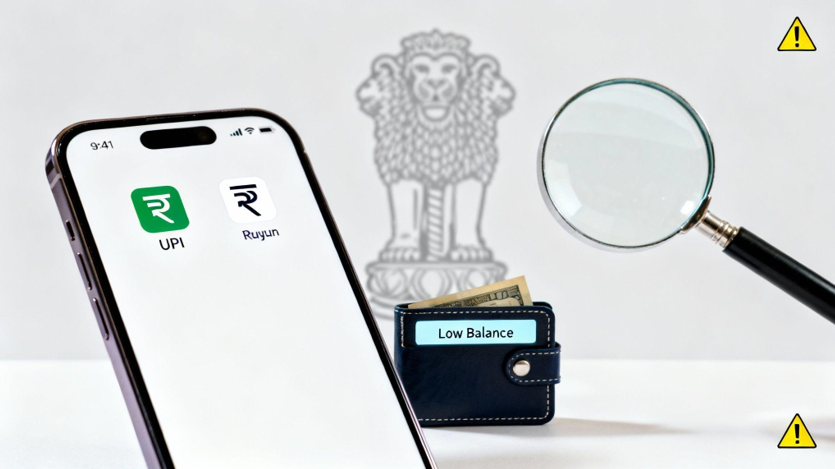
So, while you’re unlikely to face legal heat for using Parimatch, that doesn’t mean it’s a completely smooth ride. The real boss fight for players isn’t with the law—it’s with financial risk. The Indian government has shifted its strategy, focusing less on individual players and more on the financial networks that keep these offshore platforms afloat.
Authorities are now cracking down on payment processors and investigating operators for serious offences like tax evasion and money laundering. Think of it like a siege. Instead of going after every soldier, they’re cutting off the supply lines. If the government successfully blocks the payment gateways Parimatch uses to move money in and out of India, it becomes a massive headache for you.
Suddenly, your deposits might fail, or even worse, a withdrawal could get stuck in limbo. There’s also the very real possibility that a platform could just pull out of the Indian market if things get too hot, potentially taking player funds with it.
How The Government Is Cracking Down
This isn’t just an empty threat; the government is actively dismantling the complex financial webs these platforms rely on.
A major probe by the Directorate General of GST Intelligence (DGGI) uncovered a network allegedly linked to Parimatch that funnelled around ₹700 crore from Indian users to offshore tax havens. This was done using a staggering network of nearly 400 shell companies. The key takeaway here is that these investigations target the operators for GST evasion and money laundering, not the players placing bets. You can explore more details on this massive financial investigation to understand just how deep these operations go.
This information is crucial because it highlights where the real danger lies. The risk isn’t a knock on your door from law enforcement; it’s waking up one morning to find the platform—and your account balance—has simply vanished.
Your Player Safety Checklist
So, how do you protect your funds? The smartest approach is to minimise your exposure. Never treat your betting account like a bank account. Don’t be a noob.
Here are a few essential tips every player should follow:
- Don’t Hoard Your Winnings: Avoid keeping a large balance in your Parimatch account. It’s much safer to make frequent withdrawals of your winnings back to your personal accounts. Don’t leave your loot unguarded.
- Use Secure Payment Layers: Consider using e-wallets or other third-party payment services. This adds a buffer between the betting site and your primary bank account, giving you an extra layer of security.
- Read the Fine Print: Always take the time to read the platform’s terms and conditions. Pay close attention to rules about withdrawal limits and processing times so you know exactly what to expect.
The Final Verdict And How To Play Safely
So, what’s the bottom line? After navigating the maze of Indian gambling laws, the big question is still on the table: is Parimatch actually legal? The simplest answer is that it exists in a legal grey area. For you, the player, this means you aren’t directly breaking any central laws by playing, but you absolutely need to be smart about it.
The situation is always changing. The government seems more interested in cutting off the money flow to these platforms rather than going after individual users. Parimatch’s offshore status helps it sidestep older Indian regulations, but that’s no guarantee of a completely risk-free ride. The real challenge isn’t avoiding the law—it’s protecting your money.
Here’s the key thing to remember: your biggest risk isn’t legal action, but financial problems. If the government suddenly blocks a payment method or Parimatch decides to leave the Indian market, your account balance could be at risk.
Your Safe Gaming Checklist
To keep things fun and avoid any nasty surprises, you need a game plan. Think of this as your personal checklist for playing in the grey market without getting burned. Treat every one of these steps seriously—they’re all about protecting you and your hard-earned cash.
Here’s what you need to do:
- Verify the Licence: Before you do anything else, check that the site holds a valid international gaming licence from a reputable authority like Curaçao. This is your first and most important shield against dodgy operators.
- Set Personal Limits: Don’t just dive in without a budget. Use the responsible gaming tools on the site to set daily or weekly limits on your deposits and bets. It’s the best way to keep your bankroll in check.
- Understand Withdrawals: Get to know the withdrawal rules inside and out. Pay attention to minimum withdrawal amounts and how long it takes to process payments. Crucially, don’t let large sums of winnings just sit in your account—cash out regularly.
- Stay Updated on State Laws: Always remember that states like Andhra Pradesh and Telangana have their own strict rules banning online gambling. A quick search for your local state’s laws is a five-minute job that can save you a lot of trouble.
Following these simple rules will help you make a much smarter decision and lower your risks. If you want a more detailed guide, have a look at our article covering the top tips for online gambling newcomers, which is packed with more essential advice.
