

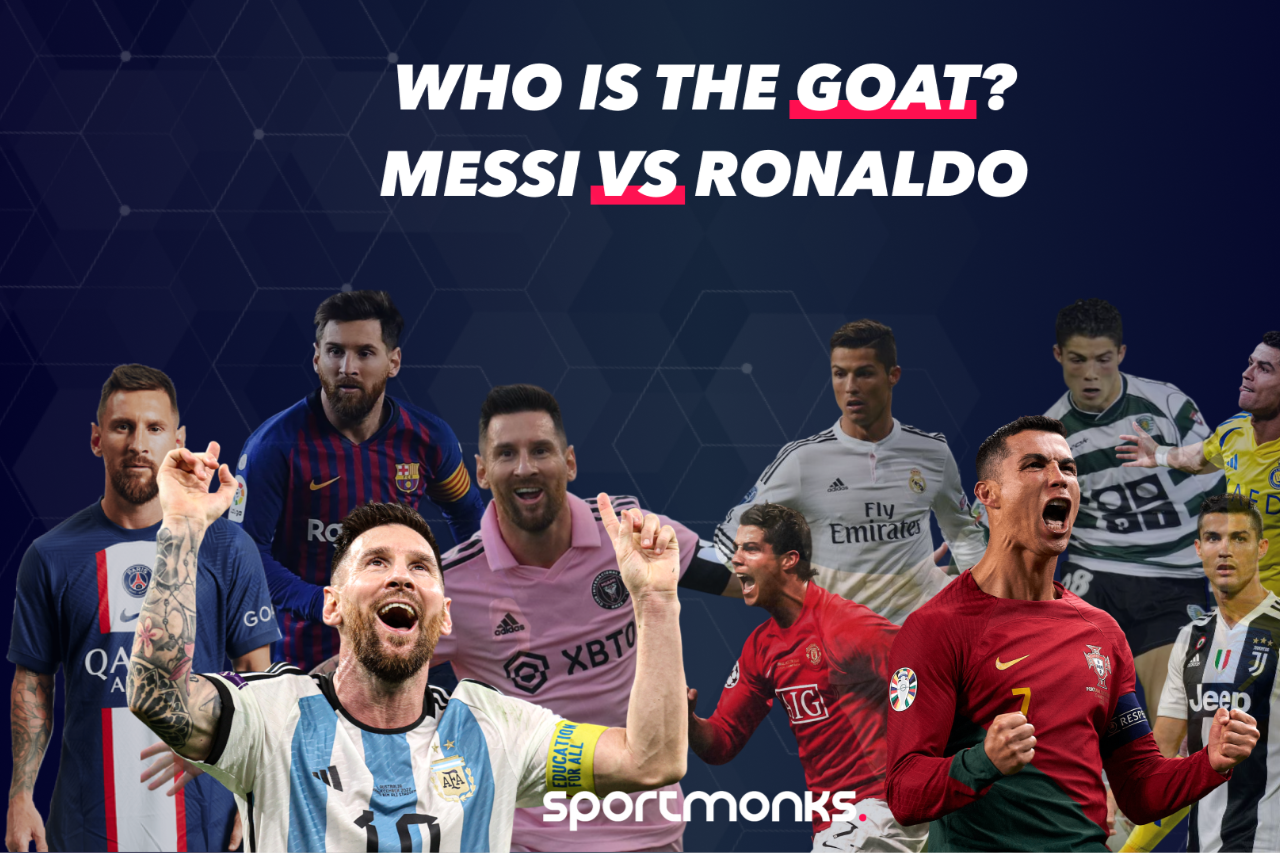
Football debates never truly end. They evolve, intensify, pause during tournaments, then reignite with fresh evidence and renewed conviction. No debate burns more persistently or generates more genuine passion than the question of football’s greatest player — a conversation that touches statistics, aesthetics, cultural context, and ultimately what we believe excellence in sport actually means.
Dbbet engages with football’s greatest narratives as genuine analytical questions deserving serious examination rather than tribal allegiance. Who has the most assists in football history, who has the most trophies in football, who is the best football player in the world, and who is the goat of football — these questions deserve honest, evidence-based engagement that respects the complexity of comparing careers spanning different eras, leagues, and competitive contexts simultaneously.
Why the GOAT Question Resists Simple Answers
Before examining specific candidates, understanding why the GOAT question generates such sustained debate matters enormously. Football’s competitive landscape varies so dramatically across eras, leagues, and national contexts that direct statistical comparison between players from different periods requires careful qualification rather than simple number stacking.
Lionel Messi accumulating assists in LaLiga against defenses of a specific era tells us something genuinely meaningful — but comparing those numbers directly to players from the 1970s operating under different rules, different physical preparation standards, and dramatically different tactical frameworks requires intellectual honesty about what such comparisons actually reveal.
The GOAT debate ultimately involves value judgments about which qualities matter most — goals, assists, trophies, individual awards, playoff performance, consistency across time, or the more ineffable quality of transforming every team and competition touched into something more beautiful and unpredictable than it would have been otherwise.
Who Has the Most Assists in Football History
The assists record conversation in football carries significant complication — comprehensive assist tracking across entire careers became standard practice relatively recently, meaning historical comparison involves considerable statistical uncertainty for careers predating detailed record-keeping.
Among contemporary players with reliable comprehensive data, Lionel Messi’s assist tallies across club and international football place him at or near the summit of any honest all-time list. His combination of creative vision, technical precision, and sustained excellence across nearly two decades of elite competition has produced an assists record that reflects consistent creation rather than isolated creative brilliance.
Cristiano Ronaldo’s assist numbers — frequently underappreciated in analyses focused on his goal-scoring dominance — reflect genuine creative capability across his Manchester United, Real Madrid, and Juventus careers. His ability to create for teammates despite primarily functioning as a goalscoring focal point demonstrates the completeness that separates truly elite forwards from specialist goalscorers.
Thomas Müller’s assists record within the Bundesliga and Champions League contexts deserves specific acknowledgment — a player whose creative contributions have been analytically captured through expected assists metrics that reveal creative consistency even when final touch credit went elsewhere. His raumdeuter role — space interpreter — produced assists accumulation that serious analysts consider among European football’s most sustained.
Who Has the Most Trophies in Football
The trophy accumulation question produces clearer factual answers than the GOAT debate’s more philosophical dimensions — though interpreting trophy counts requires contextual understanding about which trophies reflect genuine competitive achievement versus structural advantages.
Lionel Messi’s trophy collection spanning LaLiga titles, Copa del Rey victories, Champions League trophies with Barcelona, Ligue 1 with PSG, and culminating in the 2022 World Cup with Argentina represents extraordinary breadth across club and international competition. The World Cup addition resolved the one significant gap critics identified in his trophy collection — allowing direct comparison with players whose international trophy collections previously gave them specific GOAT arguments.
Cristiano Ronaldo’s trophies across Manchester United, Real Madrid, and Juventus — combined with the 2016 European Championship with Portugal — reflect comparable accumulation across different competitive contexts. His Champions League collection — five titles across multiple clubs — represents a trophy achievement that speaks specifically to sustained performance in football’s most prestigious club competition.
Dani Alves held the record for most trophies won by any professional footballer for an extended period — his collection spanning Brazilian, Spanish, Italian, French, and international competition reflecting a career specifically constructed around team success rather than individual glory. His trophy accumulation across multiple leagues and competitions provides the most comprehensive answer to who has the most trophies in football when breadth rather than prestige weighting defines the measurement.
Messi vs Ronaldo: The Framework That Defined an Era
Any honest examination of who is the goat of football must engage seriously with the Messi-Ronaldo era — two players whose simultaneous peak careers created the most sustained head-to-head excellence comparison in football history.
The comparison has been conducted exhaustively across every conceivable statistical dimension — goals, assists, Champions League performances, domestic league consistency, major final performances, and the more subjective assessments of playing style, athletic evolution, and impact on competitive contexts beyond pure statistics.
Messi’s case rests on natural genius — a player whose technical relationship with the football and spatial understanding of the game represents something genuinely unprecedented in the sport’s history. His dribbling success rates, chance creation frequency, and the specific quality of goals scored against elite opposition in crucial moments reflect competitive excellence that statistical frameworks consistently struggle to fully capture.
Ronaldo’s case rests on willed achievement — a player whose natural gifts were extraordinary but whose transformation through dedication, physical development, and competitive mentality into a sustained goal-scoring machine across multiple leagues and competitive contexts represents a different but equally valid expression of football greatness. His adaptability — performing at elite levels across English, Spanish, Italian, and Portuguese football across a twenty-year career — reflects qualities that pure natural talent cannot explain.
Who Is the Best Football Player in the World Currently
The current best player question shifts the frame from historical comparison to present-moment assessment — and in 2026, the answer involves a generation of players who emerged in the shadow of the Messi-Ronaldo duopoly and are establishing their own claim to football’s summit.
Kylian Mbappé’s position in the contemporary best player conversation reflects extraordinary natural gifts combined with trophy accumulation at club level and the kind of World Cup performance that elevates players into football’s consciousness at genuinely global scale. His pace, finishing quality, and big-match performance record suggest a player capable of defining the next era of football excellence.
Erling Haaland’s goal-scoring records across Bundesliga and Premier League competition have challenged what observers believed possible in terms of sustained scoring efficiency at elite level. His physical profile — combining exceptional pace with genuine aerial threat and clinical finishing — creates a goalscoring tool that defensive systems find genuinely difficult to neutralize across full seasons of intensive tactical attention.
Vinicius Junior’s development into one of football’s most dangerous attacking players reflects a technical evolution combining natural dribbling gifts with improved decision-making and goalscoring consistency that earlier career stages didn’t reliably demonstrate. His Champions League performances have provided the high-stakes evidence that separates very good players from genuine elite candidates.
The Trophy Weighting Question
Not all trophies carry equivalent significance — and honest trophy comparison requires acknowledging this weighting reality rather than treating all silverware as equal competitive evidence.
A Champions League title reflects sustained elite performance across multiple rounds against Europe’s best-prepared opponents in a competition where single-leg knockout eliminations mean that fortune interacts with quality in ways that league titles — determined across thirty-eight or thirty-four games — don’t equivalently allow.
World Cup victories carry unique significance because they occur once every four years, require navigating pressure that no club competition generates equivalently, and represent national rather than club achievement — meaning individual players cannot simply join stronger squads to improve their chances the way club transfers allow.
Domestic league titles reflect sustained excellence more reliably than knockout competitions but vary enormously in competitive difficulty across different national contexts — a LaLiga title achieved against genuine competition from Atletico Madrid and Real Madrid reflects different achievement than domestic dominance in weaker competitive environments.
Historical Candidates: Beyond the Modern Era
Honest GOAT analysis requires acknowledging pre-Messi-Ronaldo candidates whose cases deserve serious consideration rather than dismissal as products of less competitive eras.
Pelé’s three World Cup victories — still the most World Cup winner’s medals held by any outfield player — represent a trophy achievement in football’s most prestigious competition that no subsequent player has matched. His goal-scoring records, adjusted for the comprehensive tracking limitations of his era, suggest output that contemporary statistical frameworks would likely classify as extraordinary by any reasonable measurement standard.
Diego Maradona’s 1986 World Cup performance — personally elevating Argentina to the championship through contributions that transcended normal individual impact on team outcomes — represents the most concentrated example of individual player influence on a World Cup in the competition’s history. His technical gifts, competitive intelligence, and specific ability to perform at extraordinary levels when stakes were highest justify his continued presence in any intellectually honest GOAT conversation.
Johan Cruyff’s influence extended beyond individual performance into conceptual contribution — his playing style and subsequent coaching philosophy generating football ideas that transformed how the game is conceptually understood and tactically practiced globally. Cruyff’s GOAT case rests partly on performance and partly on intellectual legacy — a combination that makes direct statistical comparison particularly challenging.
What Statistics Miss
The who is the goat of football question ultimately runs into the limits of statistical measurement in ways that honest analysts must acknowledge. The specific quality that separates very good from genuinely great players frequently manifests in dimensions that standard metrics don’t capture equivalently.
Leadership in moments of genuine collective difficulty. The specific impact of a player’s presence on opponents’ psychological approach to matches. The way certain players transform not just individual performances but entire team competitive cultures through their presence, example, and demands on everyone around them.
These qualities influenced football outcomes across careers in ways that goals, assists, and trophy counts partially reflect but never fully capture. The GOAT debate persists not because evidence is insufficient but because the question ultimately involves value judgments about what football greatness actually means — and reasonable, informed people can weigh those values differently while examining identical evidence.
The Answer That Satisfies Nobody and Everybody
Who is the goat of football has no answer that satisfies everyone — and that’s precisely what makes the debate worth having. The evidence supports multiple cases constructed around different definitions of greatness, different weightings of statistical versus contextual evidence, and different assessments of which competitive achievements carry the most meaningful significance.
Messi’s natural genius, sustained consistency, and complete trophy collection including the World Cup makes his case perhaps the strongest single-player argument available. Ronaldo’s willed achievement, physical evolution, and multi-league excellence makes his counter-argument genuinely compelling rather than merely tribal. Historical candidates provide necessary perspective on how greatness has been expressed across different eras of football’s development.
The GOAT debate’s real value isn’t the answer it eventually produces — it’s the quality of attention it demands from everyone who engages with it seriously. Football watched through the lens of these questions becomes richer, more analytically engaged, and ultimately more rewarding than football followed purely for tribal allegiance and immediate results. That enriched engagement is precisely what the greatest players in the sport’s history have always deserved.
