

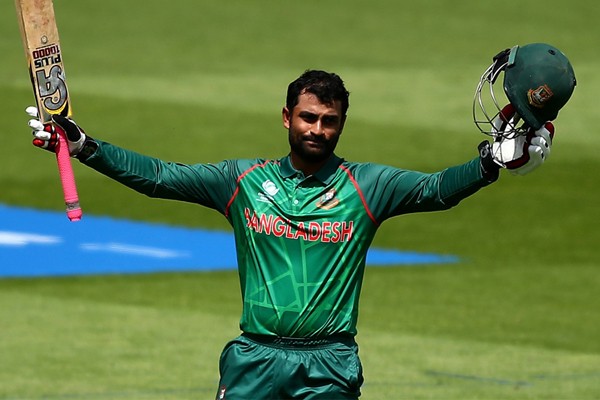
Bangladesh cricket’s story cannot be told honestly without Tamim Iqbal occupying its most prominent chapters. In a cricketing culture that worships the game with religious intensity, certain players transcend performance statistics to become something more permanent — symbols of what their nation’s cricket represents, embodiments of collective aspiration, and the specific human stories that make sporting achievement genuinely meaningful beyond scorecards and averages.
Tamim is precisely this kind of cricketer for Bangladesh — a left-handed opener whose career spanned two decades of the Tigers’ most significant competitive development, whose records rewrote what Bangladeshi batting excellence could achieve, and whose complex relationship with the sport’s institutional structures has generated as much discussion as his considerable on-field accomplishments.
dbbet follows Bangladesh cricket with genuine analytical investment — recognizing that understanding tamim iqbal’s complete career narrative, what bangladesh cricketer tamim iqbal represents within the Tigers’ competitive history, and the latest tamim iqbal news provides essential context for appreciating Bangladesh cricket’s most celebrated batting career.
Origins: A Cricketing Family
Tamim Iqbal Khan was born on 20 March 1989 in Chittagong — a port city whose specific cricketing culture has historically produced technically accomplished players whose particular batting characteristics reflect the competitive environments that Chittagong’s cricket develops through dense local competition.
His family background created the specific developmental environment that elite batting requires beyond natural talent alone. His uncle Akram Khan represented Bangladesh cricket with distinction, and his cousin Nafees Iqbal played international cricket — creating the particular family cricket culture whose accumulated knowledge, competitive instinct, and the specific understanding of what international cricket demands gave Tamim developmental advantages that most aspiring cricketers access only through formal coaching rather than familial immersion.
This cricket family foundation embedded specific competitive values — the particular understanding of what sustained excellence requires, the specific psychological frameworks that professional cricket demands, and the foundational technical knowledge that batting at international level requires as baseline competence before individual talent expression becomes the primary developmental variable.
International Debut and Early Promise
Tamim’s international debut arrived in 2007 — a nineteen-year-old left-hander whose specific technical qualities and the particular aggressive intent that characterized his batting approach from earliest international appearances immediately distinguished him from the more cautious batting philosophies that Bangladesh’s cricket had previously employed as its primary competitive approach.
His early international performances demonstrated the specific qualities that would define his career — the aggressive driving through the off-side, the particular pull shot whose execution reflected exceptional reflexes against pace bowling, and the willingness to attack quality bowling in ways that Bangladesh’s batting hadn’t previously attempted with consistent conviction regardless of opponent quality or match situation pressure.
The 2007 World Cup provided Tamim’s first major international platform — a tournament where Bangladesh’s cricket announced its arrival with specific competitive performances that the cricketing world’s established hierarchies hadn’t anticipated as achievable within the competitive timeline that Bangladesh cricket’s development suggested was realistic. His specific contribution to that tournament’s narrative established the particular aggressive batting identity that would subsequently become Bangladesh cricket’s most recognizable competitive characteristic.
Record-Breaking Career Highlights
Tamim Iqbal’s career records represent Bangladesh cricket’s most comprehensive individual batting achievement — statistical landmarks whose accumulation across Tests, ODIs, and T20Is collectively established new ceilings for what Bangladeshi batting excellence could produce against international competition across two decades of sustained performance.
His Test record — becoming Bangladesh’s highest run-scorer in the longest format — reflects the specific technical development that separated him from the majority of Bangladesh’s batting generation whose performances, while competent, didn’t sustain the consistency across conditions, opponents, and extended career timelines that Test cricket’s most demanding format requires for genuine record accumulation.
His ODI achievements — including Bangladesh’s highest individual ODI score and the particular milestone of becoming the first Bangladeshi batsman to score 8,000 ODI runs — created the statistical foundation that Bangladesh cricket’s batting legacy rests upon more completely than any other individual’s career contribution. These milestones weren’t simply personal achievements but institutional benchmarks that redefined what Bangladesh cricket could legitimately aspire toward as achievable targets rather than distant aspirational possibilities.
Technical Brilliance: The Left-Hander’s Art
Understanding tamim iqbal as a cricket performer requires engaging with the specific technical qualities that made him genuinely dangerous against all bowling types across different conditions — a left-handed opener whose particular combination of aggressive intent and technical correctness created batting that international bowlers of genuine quality found genuinely difficult to contain regardless of how specifically they prepared for his tendencies.
His off-side play — the particular driving through extra cover and the specific cut shot whose execution reflected exceptional hand-eye coordination — created scoring zones that bowlers adjusting toward his on-side strengths exposed through the particular risk they accepted by conceding off-side width that his technique punished more consistently than most comparable opening batsmen.
The specific courage that his batting approach required — facing genuinely fast bowling with aggressive intent rather than the defensive positioning that most batsmen adopt against high-quality pace — reflected a competitive mentality that Bangladesh cricket benefited from enormously through its specific inspiration effect on teammates whose own aggressive intent increased when watching Tamim’s approach model the particular competitive philosophy that successful batting against elite opposition requires.
Major Innings That Defined His Legacy
Tamim’s career contains specific innings whose context and execution elevated them beyond statistical significance into genuine cricket folklore — performances that Bangladesh supporters reference when discussing what their cricket’s possibilities actually encompass rather than simply what historical results have demonstrated as achieved outcomes.
His century against England in the 2010 Old Trafford Test — in conditions that challenged far more experienced batsmen whose technical foundations for English conditions represented accumulated experience that Tamim didn’t yet possess — demonstrated the specific talent and competitive temperament that genuine batting quality expresses precisely when conditions and situation create maximum challenge rather than comfortable scoring environments.
The specific ODI innings whose combination of timing, aggression, and technical precision created genuine scoring rates against elite bowling attacks — particularly the specific performances against India in high-pressure bilateral encounters whose cultural significance amplified competitive weight beyond standard ODI cricket’s already meaningful competitive context — represent the innings that Bangladesh cricket’s complete narrative requires for honest comprehensive representation.
The Captaincy Chapter
Tamim’s Bangladesh captaincy — spanning a period whose competitive results and institutional relationships created both genuine achievements and complex narrative dimensions — added leadership responsibility to his batting excellence in ways that his career’s complete story requires honest engagement with rather than selective emphasis on either its successful dimensions or its challenging aspects.
His captaincy style reflected specific leadership philosophy — direct, demanding, and the particular competitive intensity that his own playing approach expressed translated into collective expectations that not all teammates found consistently comfortable alongside its genuine motivational effectiveness for others whose competitive response to demanding leadership delivered better performances than more accommodating approaches produced.
The specific competitive achievements under his captaincy — series victories and competitive tournament performances that Bangladesh cricket’s institutional progress was building toward — coexist with the institutional tensions whose public expression created the particular narrative complexity that Bangladesh cricket’s leadership history will process across whatever assessment perspective eventual historical distance provides.
Retirement, Return, and Tamim Iqbal News
The tamim iqbal news landscape in recent periods has reflected the specific complexity that genuinely consequential careers create when their conclusions involve the particular institutional, personal, and competitive factors that simple retirement announcements don’t adequately capture — a narrative whose complete dimensions require ongoing engagement rather than single definitive chapter closure.
His retirement announcement, subsequent return considerations, and the specific institutional dynamics surrounding his Bangladesh cricket involvement reflect the particular challenges that player-board relationships create when individual competitive ambitions, institutional priorities, and the specific personal factors that retirement decisions involve don’t align into the clean narrative conclusions that cricket culture prefers over the messier realities that genuine institutional relationships actually produce.
The Bangladesh cricket community’s specific response to tamim iqbal news developments — the passionate engagement that his career’s popularity creates among supporters whose emotional investment in his cricket transcends the purely competitive dimensions that institutional analysis emphasizes — reflects how completely he has embedded himself within Bangladesh cricket’s emotional landscape in ways that extend far beyond statistical records whose numerical expression doesn’t capture the particular connection between supporter community and player that his specific career has created.
Impact on Bangladesh Cricket Culture
Beyond statistics and institutional narratives, tamim iqbal’s most significant contribution to Bangladesh cricket involves the specific cultural impact that consistently excellent individual performances deliver when accumulated across the timeline through which Bangladesh cricket’s broader competitive development was simultaneously occurring.
His specific example — demonstrating through repeated competitive evidence that Bangladesh cricketers could perform with genuine quality against elite international opposition rather than simply competing respectably — created the particular belief infrastructure that Bangladesh cricket’s subsequent generations have built their competitive confidence upon rather than establishing it independently through their own individual developmental journeys.
The batting academies, the young openers who model their technical approaches on his specific characteristics, and the particular aggressive intent that Bangladesh’s batting culture has increasingly expressed as its competitive identity — these cultural outputs from his career represent a legacy whose influence on Bangladesh cricket’s future trajectories extends far beyond the specific competitive period within which his own performances occurred.
The Complete Legacy
Tamim Iqbal’s complete legacy within Bangladesh cricket encompasses the statistical records, the specific memorable performances, the cultural impact, and the particular institutional relationships whose complexity doesn’t diminish but rather adds dimensionality to what his career ultimately represents for the cricket he devoted two decades of competitive excellence to serving.
Bangladesh cricket is genuinely different — more confident, more technically ambitious, more willing to impose its own competitive identity on encounters regardless of opponent reputation — because Tamim Iqbal spent twenty years demonstrating through competitive evidence that these approaches were achievable rather than aspirational.
That specific contribution to what Bangladesh cricket believes about itself represents the most enduring dimension of a career whose records will eventually be surpassed while its cultural influence persists within the competitive DNA that subsequent generations inherit as foundational rather than constructing independently.
