

Baseball builds careers around specific player-city relationships whose chemistry produces something beyond individual statistical excellence — a connection between athlete and community that transforms very good players into genuinely beloved figures whose contributions resonate beyond wins and losses into something more permanent. St. Louis has always understood this dynamic particularly well. Cardinals fans are among baseball’s most knowledgeable and passionate — a supporter community that recognizes genuine excellence, rewards consistent effort, and builds the specific cultural attachment to players that makes Busch Stadium one of the sport’s most authentic baseball environments.
db bet follows MLB baseball with genuine analytical investment — recognizing that understanding stl cardinals competitive trajectory, nolan arenado’s specific contributions and complicated recent history with the franchise, and how st louis cardinals games reflect broader organizational direction provides essential context for appreciating one of baseball’s most historically significant franchises navigating genuine transition.
Cardinals Opening Days: Early 2026 Results
The stl cardinals opened their 2026 season with back-to-back victories over the New York Mets at Busch Stadium — winning 3-0 on March 31 and following with a tight 2-1 victory on April 1. These early results communicate something genuine about a Cardinals roster that enters 2026 with real questions about competitive direction but also demonstrable pitching quality capable of shutting down legitimate offensive teams.
Back-to-back wins against the Mets — a legitimate National League contender with genuine offensive capability — suggest that St. Louis’s pitching infrastructure remains competitive despite the roster transitions that recent seasons have produced. The Cardinals then travel to Detroit for a three-game series before Washington — early road tests whose results will sharpen understanding of where this team actually sits within NL Central competitive hierarchy.
The Cardinals’ Historical Identity
Understanding st louis cardinals games requires appreciating the specific organizational identity that eleven World Series championships have built — a franchise whose competitive expectations, fan sophistication, and organizational culture create standards that rebuilding cycles struggle against more than equivalent rebuilds at historically less successful franchises.
The Cardinals Way — a phrase reflecting specific organizational philosophies about player development, fundamentals emphasis, and competitive culture — has produced remarkable sustained success across different eras. Different generations of Cardinals teams have maintained competitive relevance through organizational depth rather than depending exclusively on individual superstar acquisition — a development-focused philosophy that has occasionally required patience but has consistently produced competitive teams across decades of sustained excellence.
Current organizational leadership faces the specific challenge of maintaining this identity while navigating genuine roster transition — older core players aging, younger players developing at different rates, and the specific competitive balance questions that NL Central positioning creates annually.
Nolan Arenado: The Complete Story
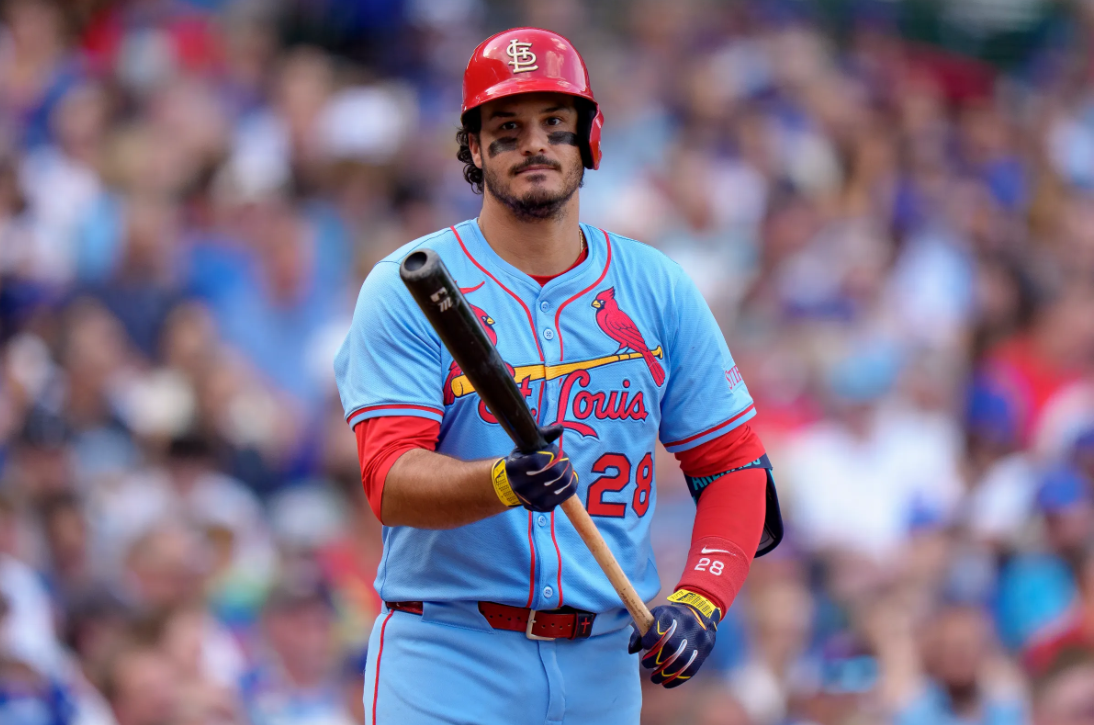
No examination of the Cardinals’ recent history is complete without seriously engaging with nolan arenado — a third baseman whose arrival generated enormous excitement, whose performance has been genuinely excellent, and whose relationship with the franchise has developed complications that create one of baseball’s more interesting ongoing narratives.
Arenado’s defensive excellence — ten consecutive Gold Glove Awards representing perhaps the most sustained defensive excellence recognition in baseball’s recent history — has never been questioned. At third base, he occupies genuinely historic defensive territory. His specific combination of range, arm strength, and the specific anticipatory positioning that elite infield defense requires create defensive performances whose quality serious baseball observers uniformly acknowledge as among the game’s absolute best.
His offensive contributions — consistent 30-plus home run production, strong RBI totals, and the specific clutch hitting quality that Cardinals fans recognize and value — have made him exactly the middle-of-the-order presence that his acquisition intended to provide. The statistical case for Arenado’s Cardinals contribution is genuinely strong across his tenure.
The Trade Request Complication
The specific narrative complication surrounding nolan arenado involves his trade request — a situation that created genuine organizational tension and public discussion that most Cardinals relationships with star players haven’t previously generated during the franchise’s modern era.
Arenado’s reported desire to be traded reflected specific frustrations about team direction, competitive window concerns, and the particular situation that players approaching their career’s later stages face when organizational trajectories don’t align with remaining competitive ambitions. Understanding his position requires acknowledging genuine legitimacy — a player who competed at an elite level wanting to compete for championships in his remaining peak years represents a reasonable professional position rather than simple disloyalty.
The Cardinals’ response — maintaining Arenado on the roster while navigating trade conversations that didn’t produce mutually satisfactory outcomes — created the specific limbo that both parties eventually had to resolve through either successful trade or recommitment to making the relationship work productively despite its complications.
Arenado’s Defensive Legacy at Third
Regardless of how his Cardinals tenure ultimately concludes, nolan arenado’s defensive contribution has provided St. Louis fans with regular opportunities to witness genuinely historic defensive excellence — performances whose quality baseball historians will document as representing the position’s peak in his specific era.
The specific plays that define Arenado’s defensive artistry — charging slow rollers whose combined fielding and throwing mechanics create outs from positions that ordinary third basemen can’t convert, ranging to the line for balls whose trajectory most defenders watch land for doubles, and the specific arm accuracy that allows off-balance throws to succeed where most players’ arm strength would prove insufficient — create a defensive highlight catalog that Busch Stadium crowds have had the specific privilege of watching regularly during his Cardinals years.
His defensive metrics — Defensive Runs Saved, Outs Above Average, and the various advanced fielding statistics that analytically informed evaluation uses alongside traditional Gold Glove recognition — consistently confirm that visual observation isn’t inflating his defensive reputation. The numbers validate what watching him reveals — genuine all-time defensive excellence at a demanding position.
The Pitching Foundation
St. Louis Cardinals games in 2026 will be defined substantially by pitching quality — the organizational strength that the back-to-back shutout-quality performances against the Mets demonstrated as the season’s opening statement. The Cardinals’ historical emphasis on pitching development has produced rotation depth that offensive fluctuations haven’t consistently matched.
Miles Mikolas represents the veteran rotation anchor whose specific pitching approach — generating weak contact through pitch movement and location rather than overwhelming velocity — reflects the Cardinals’ pitching philosophy of developing pitchers whose durability and craft sustain effectiveness across complete seasons rather than depending on explosive stuff that injury risk and aging trajectories make unsustainable.
The rotation’s younger components represent the development investments whose return will substantially determine the Cardinals’ 2026 competitive ceiling — talented arms whose progression from promising to reliable represents the organizational optimism that Cardinals development infrastructure historically justifies across previous development cycles.
NL Central Competitive Landscape
The National League Central division creates specific competitive dynamics that st louis cardinals games reflect across the 162-game regular season. The Milwaukee Brewers’ sustained organizational excellence — building competitive teams through development and intelligent roster construction that mirrors the Cardinals’ historical approach — represents the division’s most consistent competitive challenge.
The Chicago Cubs’ continued organizational investment and the Cincinnati Reds’ developing young core create a three-team competitive cluster whose relative positioning will determine playoff access in a division whose wild card implications extend beyond divisional title competition. Pittsburgh and Colorado represent developmental phases rather than genuine 2026 contenders — their competitive trajectory pointing toward future relevance rather than current playoff threat.
Cardinals positioning within this landscape depends on whether pitching excellence translates into team winning percentage that the offensive production needed to support competitive runs can consistently complement — the specific balance question that every pitching-first team confronts across long seasons where run-scoring variance eventually tests pitching staff depth.
Young Players to Watch
Beyond established contributors, st louis cardinals games in 2026 provide opportunities to evaluate younger players whose development trajectories will define the franchise’s next competitive chapter more completely than any veteran’s continued performance regardless of individual excellence.
Jordan Walker’s continued development represents perhaps the most significant individual storyline — a prospect whose tools generated extraordinary pre-arrival enthusiasm and whose actual performance has required the specific patience that genuine prospect development demands rather than the immediate superstar impact that tool evaluations sometimes generate as premature expectations.
The Cardinals’ farm system depth — built through draft success and international signing investment across recent cycles — provides organizational optimism that roster construction beyond the current core will eventually deliver the competitive complementarity that championship teams require across all nine lineup positions rather than depending on isolated individual excellence to carry competitive burdens that complete roster construction distributes more sustainably.
Busch Stadium and Cardinal Nation ️
Understanding stl cardinals competitive context requires acknowledging the specific home environment that Busch Stadium provides — a ballpark whose fan culture, consistent sellout atmosphere, and the specific baseball knowledge that Cardinal Nation brings to every home game creates genuine competitive advantages that visiting teams consistently identify as meaningful.
The Cardinals’ home record historically exceeds their road performance at rates that home field advantage alone doesn’t fully explain — the specific crowd engagement, the particular intensity that Busch Stadium generates in crucial situations, and the organizational culture of winning that Cardinals history embeds within every home game’s specific atmosphere collectively creating competitive conditions that favor the home team beyond standard home field advantage estimates.
This home environment makes the opening Mets series victories particularly meaningful — demonstrating that 2026 Cardinals baseball at Busch Stadium will provide the specific competitive product that Cardinal Nation expects while the broader organizational questions about competitive trajectory develop clarity across a complete 162-game season.
