

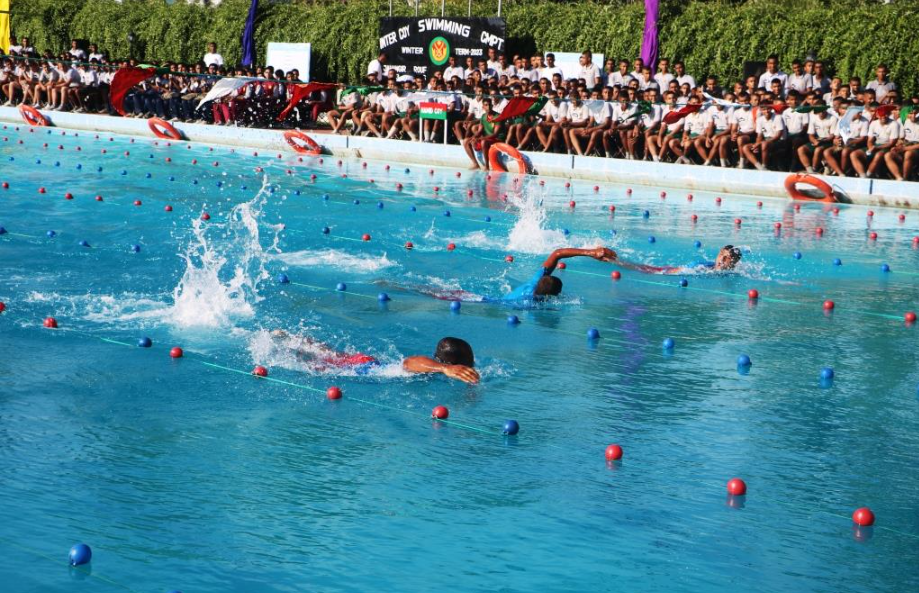
Bangladesh is a country built around water. Rivers, deltas, monsoons – water isn’t just geography here, it’s identity. Yet for decades, competitive swimming remained an afterthought in the national sports conversation.
That’s changing fast. A new generation of swimmers is emerging from Dhaka’s academies, district programs, and grassroots clubs. They’re not just learning strokes – they’re building careers.
db bet has been watching this transformation closely. As one of the region’s most engaged sports platforms, it recognizes that Bangladesh’s aquatic potential is no longer a quiet secret. The swimmers are ready. The infrastructure is growing. The story is just beginning.
From Rivers to Racing Lanes
Bangladeshis have always known how to move through water. Rural children swim in ponds and canals before they can read. That natural comfort with water is an untapped athletic resource.
The challenge has always been converting raw ability into technical skill. Competitive swimming demands precision, timing, and structured coaching – things that informal water play can’t provide alone.
Over the past decade, sports authorities have started bridging this gap. Formal academies, certified coaches, and national competitions are slowly transforming a cultural relationship with water into something far more competitive and purposeful.
The Infrastructure Push
No serious swimming program succeeds without serious facilities. Bangladesh has understood this, and investment is following intent.
The national swimming pool in Dhaka has become the centerpiece of elite aquatic development. Renovated and upgraded in recent years, it now hosts national championships, trial events, and international-standard training sessions.
Beyond the capital, district-level pools are being constructed and upgraded across divisions. Sylhet, Chittagong, and Rajshahi are each developing facilities capable of supporting youth programs at scale.
This infrastructure backbone matters enormously. World-class swimmers aren’t produced on talent alone – they’re produced in environments that demand excellence every single day.
Learning to Compete: Swimming Education in Dhaka
Swimming learning in Dhaka has evolved from basic survival classes into structured competitive programs. Academies now offer tiered coaching – from beginner fundamentals to advanced race technique and sports psychology.
Private clubs and government-backed programs are running parallel tracks. The result is a widening pipeline of young athletes entering competitive circuits earlier and better prepared than any previous generation.
Weekend swim camps, school partnership programs, and holiday clinics are pulling in children who might never have considered competitive swimming. Coaches report that the quality of junior athletes entering the system today is genuinely impressive – a sign that the foundation being built now will pay dividends for years.
Rising Stars and Breakthrough Moments ⭐
Every sport needs its breakthrough moment – one performance that shifts national perception. Bangladesh swimming has had several recently.
At the South Asian Games, Bangladeshi swimmers posted personal bests and surprised regional competitors who had long dismissed the country’s aquatic capabilities. These weren’t flukes – they were the result of systematic preparation meeting genuine talent.
Young swimmers like Mahfuza Khatun have carried the national flag at international events, showing that Bangladeshi athletes can compete seriously on Asian and global stages. Their performances inspire the next wave of talent currently grinding through morning training sessions across Dhaka’s growing academy network.
Water Polo: The Emerging Frontier
Swimming isn’t the only aquatic discipline gaining momentum. Water polo bd is quietly developing a competitive identity, with club-level competitions growing in regularity and quality.
The sport demands unique athleticism – combining swimming endurance with tactical awareness and physical contact. It’s a demanding combination, but Bangladeshi athletes are proving increasingly capable of meeting it.
Waterpolo bd competitions at university and inter-district levels are creating structured pathways for players who might not excel in lane racing but thrive in team-based aquatic sports. This diversification strengthens the entire aquatic ecosystem, not just individual disciplines.
Growing participation in water polo also means more young people spending serious time in the pool – which ultimately benefits competitive swimming as well.
What It Takes to Reach the Top
The gap between participation and elite performance is real. Here’s what Bangladesh’s top swimming programs currently focus on:
- Technical foundation: Stroke mechanics, turns, and starts refined through video analysis and certified coaching
- Physical conditioning: Dryland training, strength work, and recovery science integrated into weekly schedules
- Mental preparation: Visualization, race-day routines, and competitive exposure at regional events
- Nutritional support: Diet planning increasingly incorporated into serious athlete development programs
These elements weren’t consistently available to Bangladeshi swimmers a decade ago. Their presence now signals a genuine professionalization of the sport.
Challenges That Remain
Honest assessment matters. Bangladesh swimming faces real obstacles that enthusiasm alone won’t solve.
Funding gaps at the district level mean talented swimmers outside Dhaka often lack access to quality coaching. The national swimming pool handles elite development well, but the pipeline feeding into it remains uneven across regions.
Retention is another challenge. Young swimmers who show early promise often face family pressure to prioritize academic careers over athletic ones – a cultural dynamic that coaching programs are only beginning to address through structured scholarship models and visible career pathways.
These aren’t insurmountable problems. But solving them requires sustained commitment from sports authorities, corporate sponsors, and families alike.
The Bigger Picture
Bangladesh’s swimming story is about more than medals. It’s about building a culture where aquatic sports are taken seriously – where a child from Rajshahi or Chittagong can dream of competing at the Asian Games and find a realistic path to get there.
The foundations are in place. The talent is undeniable. The momentum is real.
Every gold medal won at a national championship, every personal best posted at a regional meet, every young swimmer stepping onto a starting block for the first time – these moments accumulate into something lasting.
Bangladesh is no longer just a cricketing nation with rivers. It’s an aquatic sports nation in the making. The lanes are open. The race has already begun.
